Thank you for making it all so easy for us and putting together a fantastic itinerary, It was just what we were looking for! - M.D. -New York
You hike independently but with full logistical support: hotel bookings, transfers, meal planning, digital maps, and route information.
Self-guided tours let you hike at your own pace while enjoying full logistical support, including luggage transfers, pre-booked accommodations, detailed route notes, and access to our custom Vamoos portal. You have the freedom to start your day when you like, take breaks as needed, and explore side trails or towns along the route.
Guided tours include a professional guide leading the group, offering expert knowledge on the trail, local culture, and alpine safety. The guide handles navigation, coordinates accommodations and transfers, and ensures the group enjoys a smooth, worry-free experience.
Our guided Deluxe Tour du Mont Blanc takes comfort to the next level, guaranteeing private rooms each night with no stays in mountain huts. This option is perfect for travelers seeking a more relaxed, hotel-based experience while still enjoying the full TMB trek with expert guidance.
Bookings are accepted up to 18 months in advance, with most travelers reserving between September and December for the following summer. The Tour du Mont is one of the most popular treks in the world and books up early. The TMB bookings typically close in late fall or early winter the year prior.
Typically: accommodations, most meals, luggage transfers, shuttle from Geneva to and from Chamonix, logistics support, and trail documentation. Optional extras include additional nights or shuttles.
Yes. This is a point-to-point trek, so each day involves hiking to the next hotel or hut. You can customize the itinerary to include rest days or extra transportation if desired.
Most hotels and restaurants can handle allergies or vegetarian/gluten-free diets. Remote mountain huts may have limited options, especially for vegan diets, as their supplies are limited.
Sturdy hiking shoes, weather-appropriate clothing, trekking poles, and a daypack are essential. For hut nights, bring a thin sleeping bag liner. A full packing list will be provided before your trip.
Tap water in towns and villages is safe to drink. You’ll also encounter streams on the trail; flowing alpine streams are generally safe, provided they are not below grazing pastures or glacier melt.
Average daily distances are 7–12 miles with roughly 3,000 feet of elevation gain. Check your itinerary for specifics. Distances may vary slightly depending on your device.
Yes. The TMB is challenging and best suited for hikers with prior experience on mountainous terrain. Daily elevation gains of 3,000–4,000 feet require good stamina.
Most hiking takes place between 5,000 and 8,000 feet, with some passes near 10,000 feet. If coming from sea level, you may feel winded at first. Mild symptoms like shortness of breath, light fatigue, or headaches are normal and usually resolve quickly.
No technical climbing is needed. Some short sections of scrambling exist, but no ropes or equipment are required. Fitness, sure footing, and a sense of adventure are key.
If you’re unable to hike a day, you’ll be responsible for arranging transportation to your next accommodation. Most villages along the route are accessible by public transport, except for mountain huts. Our team can help you plan your route and suggest options.
Yes—staying in mountain huts (refuges) is required on the TMB self-guided itinerary. The route includes a minimum of 2 hut nights, and additional hut stays may be necessary depending on availability at other accommodations along the trail.
The huts are clean and welcoming, offering dorm-style or small shared rooms, hearty meals, and a friendly alpine atmosphere. Linens and blankets are provided, though a light sleeping bag liner is recommended for comfort and hygiene. Staying in huts gives you an authentic TMB experience, with the chance to enjoy sunrise and sunset in the mountains and connect with fellow hikers along the trail.
Daily distances are fixed between accommodations. To shorten or lengthen your hike, shuttles or extra transportation may be required.
A mix of 3- and 4-star hotels, mountain inns, and occasionally Alpine huts. Most hotels provide private rooms with shared or en-suite bathrooms. Upgrades can be arranged if desired in some towns along the route.
Yes, for all hotel nights. Luggage cannot be delivered to mountain huts.
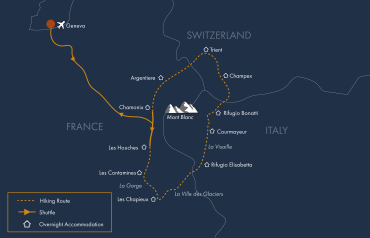
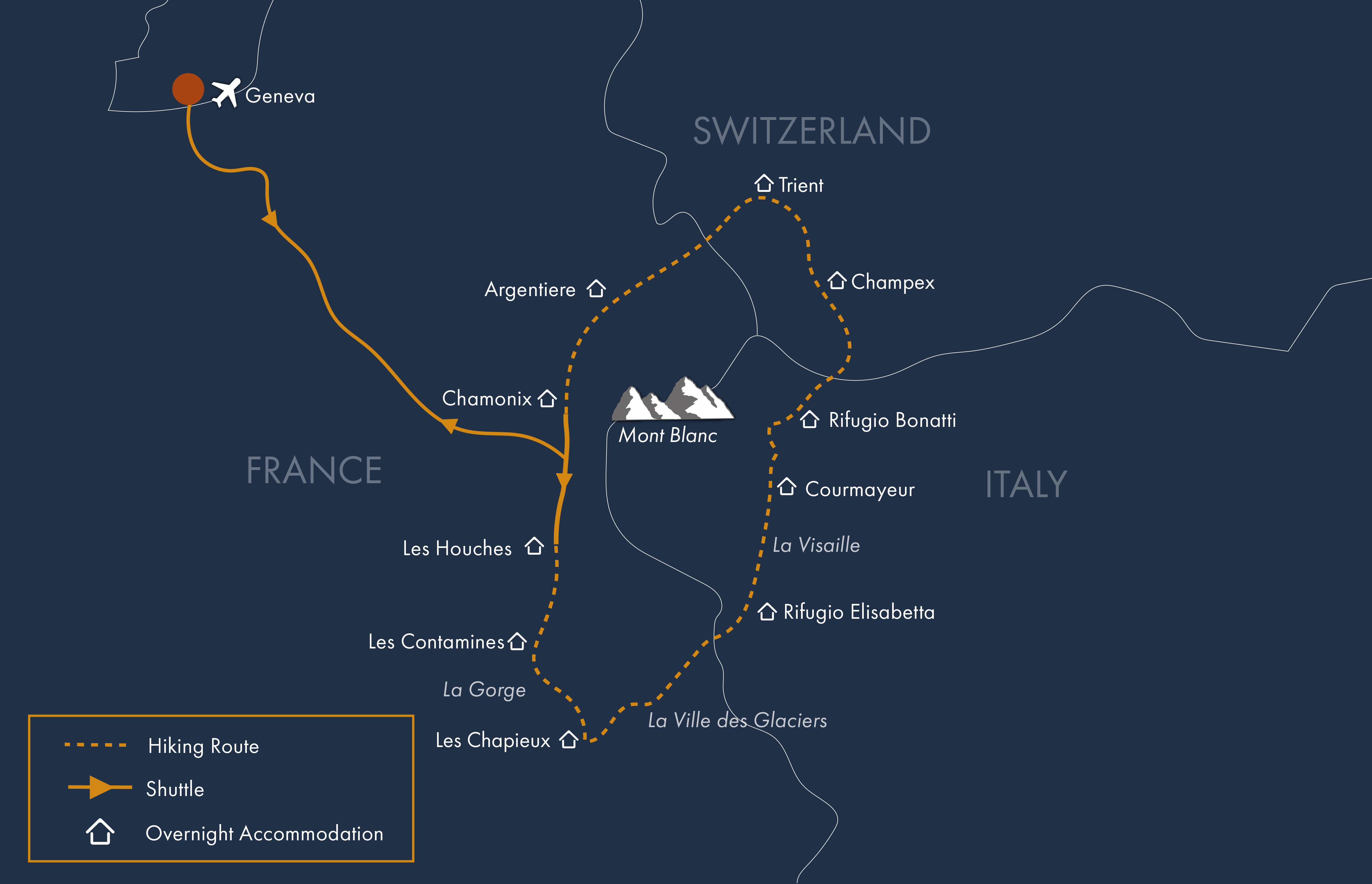
Fly into Geneva. A shuttle from Geneva to Chamonix is provided. At the end of the trek, you can fly out of Geneva (this shuttle is also included in the tour)
Children are welcome, but we recommend they be at least 12. They must be able to complete the same daily distances and sleep in dorm-style huts if staying overnight in huts.
Covers the unused half of a double room for solo travelers. Some hotels offer true singles, in which case the supplement may be lower.
Refer to our Terms & Conditions. Travel insurance is recommended.
Alpenwild adventures are designed for people who are energetic, active and filled with a spirit of adventure. We rate this trip as strenuous. You should be a strong and experienced hiker with proven endurance and in good physical condition. You should be capable of walking 5 to 8 hours per day on good trails, ascending up to 3,900 vertical feet per day, at an elevation up to 10,000 feet above sea level.