
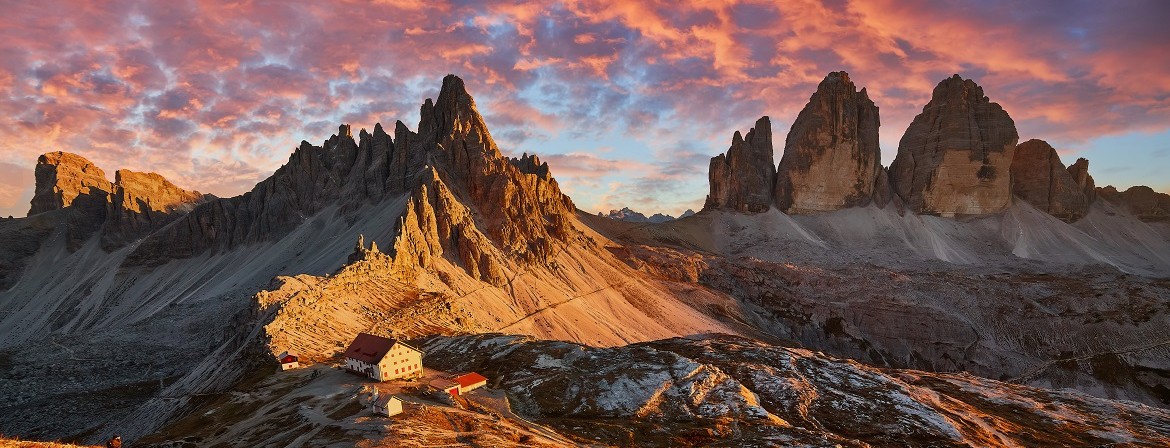

“The Dolomites were incredible and the food was fantastic.” - Alta Via 1 guest
Expect some rocky scree slopes and exposed ridges. Afternoon thunderstorms are common.
Yes—buffet breakfasts, picnic lunches, dinners at huts and hotels are included, except two dinners in San?Cassiano and Cortina. Alcoholic and specialty drinks are not included. Vegetarian options available; vegan or gluten-free options may be limited in remote areas.
Most of your hikes will conclude with time for you to wash up before dinner. Be sure to do so because dining in Italy is considered a classy occasion. Nice pants and a dress shirt are sufficient.
Accommodation includes a mix of mountain rifugios (basic dorms), valley hotels, a castle hotel, and a final-night lodging near Venice.
Bedding arrangements in many Italian hotels are a bit different than the U.S. The standard double room consists of two European single beds (each 90 cm x 200 cm) which are typically set closely together for a couple resulting in a bed about the same size as an American king bed (200 cm x 200 cm). Most hotels do not have air conditioning; the fresh mountain breeze blowing through the window is enough to cool you on a summer’s night.
The Dolomites experience rapidly changing mountain weather. Even in summer, you should be prepared for sunshine, cool alpine breezes, and the possibility of afternoon rain. Waterproof layers (jacket and pack cover), warm clothing, and sturdy footwear are essential.
The terrain can become slippery when wet, so your guide will adjust the pace or route if needed to keep the group safe and comfortable.
Our pacing guidelines are similar to those used across all Alpenwild treks:
1,200 feet of ascent per hour
2,000 feet of descent per hour
Your guide will set a steady, sustainable pace so the entire group can enjoy the journey.
You can view example hiking statistics and route profiles on Alpenwild’s AllTrails page (distances and elevation gains may vary slightly).
The Alta Via 1 stays at moderate elevations compared to other European alpine routes. Most hiking takes place between 5,000–7,500 feet (1,500–2,300 meters), with some passes reaching slightly higher.
Guests may notice mild effects of thinner air—such as shortness of breath or light fatigue—but significant altitude issues are uncommon on this trek.
If possible, we recommend arriving in Cortina a day early to rest, recover from travel, and adjust before beginning your hike.
We keep our Alta Via 1 groups intentionally small. We book only seven guest rooms in advance, which results in 6 to 12 guests per tour.
Small groups foster camaraderie, flexibility, and attentive guidance. With as few as nine guests, we include two expert guides, giving hikers room to move at their own pace while staying fully supported.
Please note that each Alpenwild tour requires a minimum of 6 guests to guarantee departure.
Expect to cover 6 to 11 miles per day, with 2,300 to 3,800 feet of elevation gain on most days.
You’ll traverse dramatic limestone peaks, panoramic ridgelines, and lush alpine valleys—arriving each evening at a cozy historic rifugio where a warm meal and comfortable bed await.
Daily distances, elevation profiles, and hiking times are provided on the detailed itinerary.
No technical or mountaineering experience is required.
The Alta Via 1 is a non-technical trekking route, though some days include:
rocky or uneven terrain,
short, steep sections, and
occasional areas where you may use your hands for balance (“scrambling”).
There are no ropes, harnesses, or via ferrata equipment used on this guided itinerary. Your expert guides are there to ensure comfort and safety throughout.
No—there are no Via Ferratas on our Alta Via 1 itinerary. All hiking routes on this tour follow well-marked alpine trails and do not require any technical climbing equipment, harnesses, or via ferrata experience. While you may occasionally see cables or short handrails along exposed sections of the trail (common throughout the Dolomites), these are simply installed for added security and do not qualify as Via Ferrata routes.
If you’re comfortable with full-day mountain hikes that include steady ascents and descents, you’ll be fully prepared for this itinerary—no technical skills required.
“BLD” means Breakfast, Lunch, and Dinner are included that day.
Alpenwild lunches are memorable—either a hot meal at a rifugio or a beautiful picnic of fresh bread, local cheeses, cured meats, fruit, and chocolate.
Evening meals at the rifugios are hearty and delicious, showcasing regional Ladin and Italian mountain cuisine.
No—Alpenwild provides daily luggage transfers for all hotel nights, so you’ll carry only your daypack on most days.
However, our Alta Via 1 itinerary includes two mountain hut (rifugio) overnights where luggage transfers are not possible. For these nights, you’ll need to carry your simple hut essentials—such as toiletries, sleepwear, medications, and any extra layers—in your daypack.
Because you’ll be carrying both your regular daytime items and your lightweight overnight gear, we recommend bringing a backpack large enough to comfortably hold everything you need for those two hut nights. Most guests find a 28–35 liter pack works well.
Your main luggage will meet you again the following day when you return to hotel accommodations.
The mountain huts (rifugios) along the Alta Via 1 are clean, welcoming, and designed for hikers. They offer comfortable dorm-style or small shared rooms, hearty meals, showers, and a warm, social mountain atmosphere.
Rifugios are not rustic shelters—they are more like cozy alpine lodges with incredible views and excellent food. Linens and blankets are provided, so you won’t need to carry a sleeping bag, though a lightweight sleeping bag liner is requried for comfort and hygiene.
Electricity, Wi-Fi, and hot water vary by hut, so we recommend charging devices when you can and carrying a small external battery.
Staying in the huts is often a highlight of the trek—offering a true Dolomites experience and a chance to enjoy sunrise and sunset high in the mountains.
Yes—prior hiking experience is strongly recommended.
The Alta Via 1 is a strenuous long-distance trek, with full days of sustained climbing and descending on rugged mountain terrain. Being comfortable with 6–11 mile hikes that include significant elevation gain will greatly enhance your experience.
You do not need technical climbing skills, but a solid fitness base and confidence hiking on rocky alpine trails are important.
Hiking the Alta Via 1 with Alpenwild is an unforgettable blend of dramatic scenery, rich culture, and exceptional hospitality. You’ll travel through the heart of the UNESCO-listed Dolomites, passing towering limestone spires, wildflower meadows, WWI tunnels, and peaceful high plateaus.
Each evening, you’ll settle into hand-selected rifugi and charming hotels, enjoying warm hospitality, private rooms on hotel nights, and satisfying mountain cuisine.
With Alpenwild’s experienced UIMLA-certified guides leading the way, your journey is seamless—filled with stories, natural history, cultural insights, and personal attention. It’s the perfect way to experience Italy’s most spectacular long-distance trekking route in comfort and style.
June
Pros: Cooler temps, lush wildflowers, quieter trails.
Cons: Some snow may remain on high passes; a few rifugios open mid-June; weather can be less predictable.
July
Pros: Long days, fully opened rifugios, generally stable trail conditions.
Cons: Busier trails and warmer temperatures in the valleys.
August
Pros: Stable weather, vibrant alpine scenery, all services operating.
Cons: Peak crowds due to holidays; afternoon thunderstorms more common.
September
Pros: Cooler temps, fewer crowds, excellent visibility—one of the best months for trekking.
Cons: Shorter days; some rifugios begin closing late in the month; early snow possible at higher elevations.
Alpenwild trips are designed for people who are energetic, active, and filled with a spirit of adventure. We rate this trip as strenuous. You should be capable of walking 6 - 8 hours per day on well-groomed and rocky trails at an elevation up to 7,000 feet above sea level.





.png&w=370&h=296&zc=3)
.png)