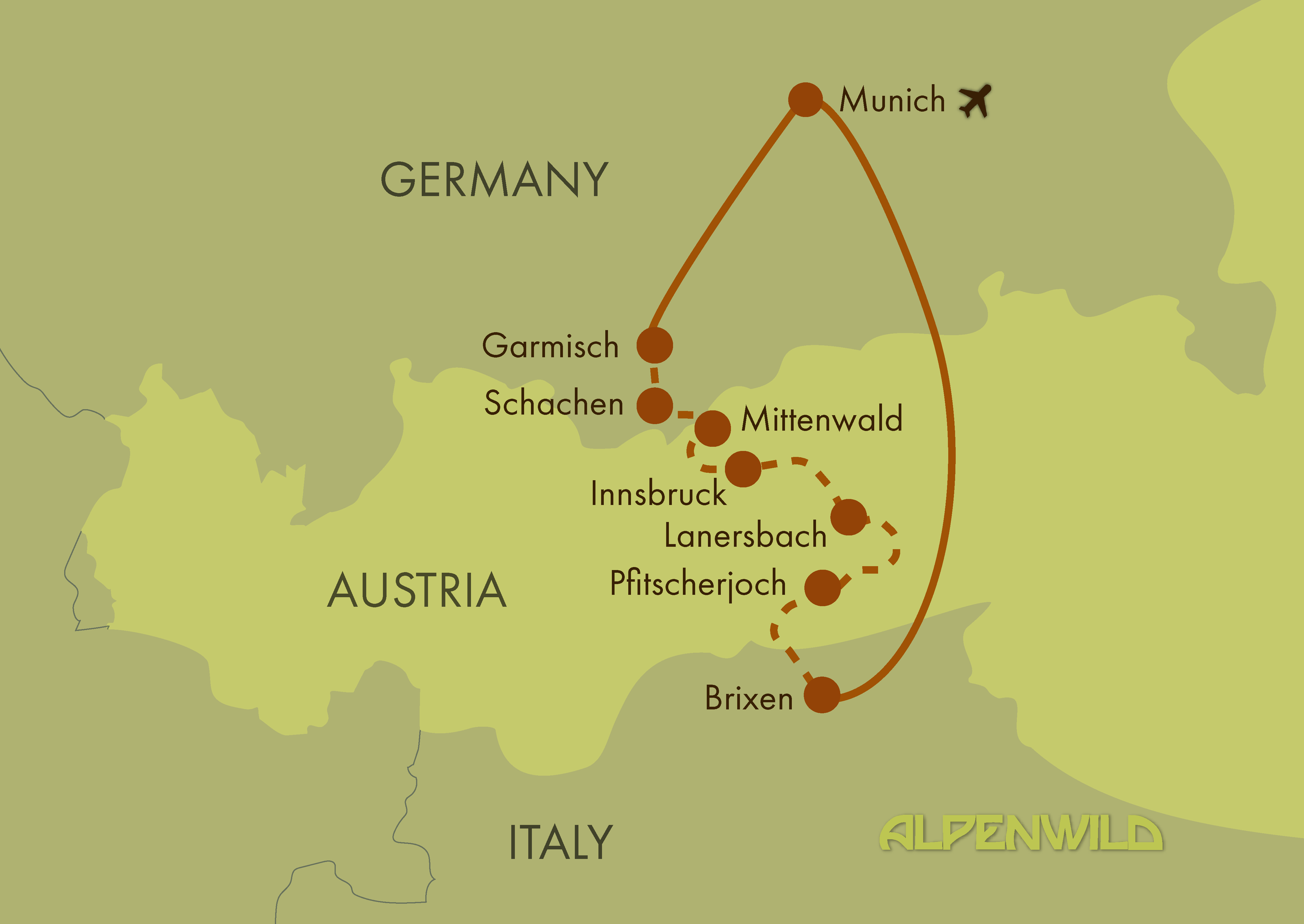
The Tyrol Traverse covers classic alpine terrain, including rocky paths, forested trails, and panoramic ridgelines. Some sections are exposed, but no technical climbing is required. Afternoon thunderstorms are possible in summer, so waterproof layers are essential.
Yes—buffet breakfasts, picnic lunches, and dinners at mountain huts and hotels are included, except for a few evenings in local towns where meals are on your own (days 4 and 6). Alcoholic and specialty drinks are not included. Vegetarian options are available; vegan or gluten-free options may be limited in remote areas.
You’ll stay in a mix of charming alpine huts, cozy hotels, and historic lodges. Most accommodations offer private rooms or shared twin rooms. The only shared/dormitory style accomodations will be at the two hut nights. Linens are provided, but a lightweight sleeping bag liner is required for hut nights. Many alpine hotels do not have air conditioning; mountain breezes are usually sufficient.
Alpine weather can change rapidly. Expect sunshine, cool breezes, occasional rain showers, thunderstorms, and sometimes even snow flurries. Sturdy, waterproof footwear and layered clothing are essential. Guides adjust the pace or route as needed to ensure safety.
Our pacing guidelines are similar to other Alpenwild treks:
1,200 feet of ascent per hour
2,000 feet of descent per hour
Your guide sets a sustainable pace so everyone can enjoy the scenery. Daily distances and elevation profiles are provided in the itinerary.
The Tyrol Traverse ranges mostly between 4,500–7,000 feet (1,400–2,100 meters). Mild effects of thinner air may occur, but serious altitude issues are rare. Arriving a day early at the starting point can help you acclimate.
Groups are intentionally small, usually 10–12 guests, ensuring personalized attention and camaraderie. For larger groups, additional guides are provided. A minimum of 6 guests is required for tour departure.
Expect 6–12 miles per day, with elevation gains of 2,000–3,500 feet. Terrain varies from alpine meadows to rocky ridges, offering dramatic views and peaceful valley stretches.
No technical climbing skills are required. Some sections involve rocky or uneven terrain and short steep areas where you may use your hands for balance (“scrambling”). No ropes, harnesses, or via ferrata equipment are needed.
No. All trails are well-marked and non-technical. Occasional handrails or cables may appear for added safety but do not constitute a via ferrata.
“BLD” indicates that Breakfast, Lunch, and Dinner are included that day. Meals range from hearty mountain hut fare to picnic lunches featuring local breads, cheeses, cured meats, and fruit.
No—Alpenwild provides daily luggage transfers for all hotel nights, so on most days you’ll only need to carry a daypack. On the Tyrol Traverse, a few nights are spent in alpine huts where luggage transfers aren’t possible. For these nights, you’ll carry a small overnight pack with essentials such as toiletries, sleepwear, medications, and extra layers. Since you’ll be carrying both your daily items and lightweight overnight gear, we recommend a backpack large enough to hold everything comfortably—most guests find a 28–35 liter pack works well. Your main luggage will be waiting for you again the following day at hotel accommodations.
Huts are cozy alpine lodges with dorm-style or small shared rooms, warm meals, and social spaces. Electricity, Wi-Fi, and hot water vary; bring a small battery pack for devices. Staying in huts is a highlight, offering stunning views and a true alpine experience.
Yes—prior hiking experience is strongly recommended. You should be comfortable with full days of sustained climbs and descents on rocky terrain. Technical climbing is not required, but solid fitness and confidence on alpine trails are important.
Expect a blend of dramatic alpine scenery, cultural insights, and comfortable accommodations. Experienced UIMLA-certified guides provide stories, natural history, and personalized support throughout. Evenings are spent in charming huts or hotels, with satisfying local cuisine.
Alpenwild trips are designed for people who are energetic, active, and filled with a spirit of adventure. We rate this trip as strenuous. You should be an experienced hiker in good physical condition. You should be capable of walking 7-8 hours per day on good trails with some steep ascents and descents, averaging 2500-4000 vertical feet per day at an elevation up to about 8000 feet above sea level. Sure-footedness is important and if you have a history of severe vertigo, it may impact your ability to do this tour.
Some days may list a range on the stats meaning that there are ways to shorten the hikes if needed with lifts or local transportation. The group tours will generally hike on the upper side of the stat ranges. Trekking poles are highly recommended on this tour.
Assume 2.5 miles/hour on the flat.
Assume 1200 feet of ascent per hour.
Assume 2000 feet of descent per hour.